



Vapor Barrier Installation in Vineland: Stop Ground Moisture Before It Spreads
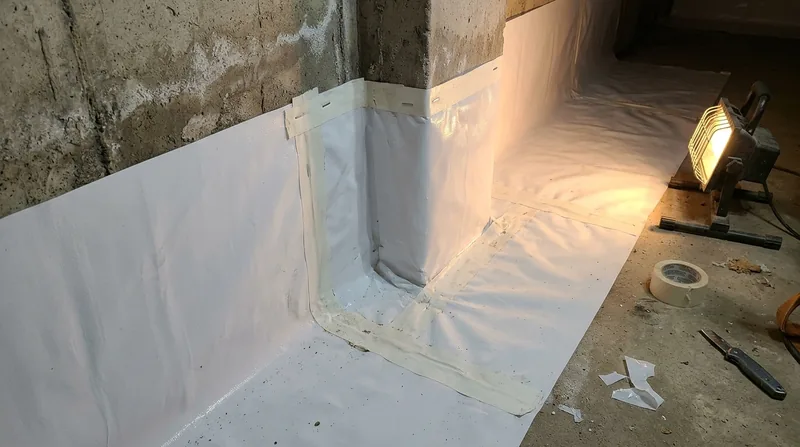
Vineland sits on sandy loam over clay at the edge of the Pine Barrens, and that soil profile drives everything we see below grade. The sand drains fast in dry weeks, but the seasonal high water table sits close to the footings, so after a long nor'easter or tropical rain the groundwater rises and pushes moisture vapor through block walls and slab joints. In the older grid streets near Landis Avenue, 1900s to 1930s houses often have full basements with fieldstone or early block foundations, and those walls wick ground moisture year round. Newer subdivisions on the east and south sides sit on graded sandy fill with shallow basements, and those slabs sweat in humid summer air. Vapor Barrier Installation in Vineland is the below-grade fix that blocks that vapor at the wall and slab instead of letting it condense on your stored goods and floor joists. We install heavy-duty sheet membrane with sealed seams and taped terminations, and we tie it into the sump where the floor needs it. If you are still diagnosing where the water comes from, start with our free basement inspection before you commit to any barrier work.
Why Vineland Basements Sweat and Seep: Sand, Clay, and a High Water Table
Vineland's ground is sandy loam and sand layered over clay, and that clay layer is what traps moisture against your foundation. Rain percolates quickly through the sand, hits the clay, and then moves laterally toward the path of least resistance, which is usually your footing drain or the block wall itself. In the older homes near downtown and along Landis Avenue, the original clay tile drains are often crushed or root-filled after 80 to 100 years, so water backs up against the wall and shows up as efflorescence, damp block, and a musty basement smell. On the 1940s to 1960s Capes and ranches east and south of downtown, the block or poured walls are sound but the slab has no vapor retarder under it, so ground moisture migrates straight up through the concrete. Freeze-thaw cycles in January and February open hairline cracks in older masonry, and each spring runoff pushes more water against the walls. A vapor barrier addresses the vapor side of that problem, and it works best when paired with drainage that moves bulk water away.
- Block walls wick ground moisture upward and release it as vapor inside the basement.
- Bare slabs without a vapor retarder let soil moisture pass directly into the room.
- Failed clay tile drains let water stand against the footing and raise interior humidity.
- Humid summer air condenses on cool basement surfaces and keeps the space damp.
When we see those four conditions together, the barrier is the right first step, and we tell you plainly when a drain tile repair has to come first.
Key info: On a 1950s ranch off East Landis Avenue, the block wall read damp to the touch at 40 percent relative humidity outside. The clay tile drain was intact, so we installed a wall and slab vapor barrier with sealed seams and brought the basement down to a dry, stable reading within two weeks.
For the official word on residential construction and moisture control requirements in New Jersey, the NJ Department of Community Affairs, Division of Codes and Standards publishes the adopted building code and local enforcement guidance.
How We Install a Vapor Barrier in a Vineland Basement
We start by walking the basement and grading the exterior, because a barrier over a wet wall traps moisture instead of stopping it. If the wall is actively seeping, we fix the source first with crack injection or drainage, then hang the membrane. Our crews work in Vineland weekly, from the older homes near downtown to the newer builds out toward East Vineland, so we know how the local block and poured walls behave. Every job follows the same sequence so the seams and terminations hold for the long run.
- We inspect the walls, slab, and footing drain to confirm the barrier is the right fix and not a cover-up.
- We clean and parge rough block or fieldstone so the membrane sits flat against the wall.
- We hang heavy-duty vapor barrier sheets from the rim down to the slab, overlapping each run.
- We seal every seam and tape every termination so vapor cannot bypass the sheet at the edges.
- We tie the barrier into the sump basin and check valve where the floor drains to a pump.
- We test the finished assembly and leave you with a clear explanation of what was installed and why.
If your basement already has an interior perimeter drain, the barrier ties directly into that system, which is why we often recommend the two together. You can read how that drainage work fits on our interior drain tile system page.
Key info: A Cape Cod in Newfield had a damp slab and rusty floor drain but no wall seepage. We installed a slab vapor barrier with taped seams and integrated it with the existing sump, and the musty smell cleared once the slab stopped releasing ground moisture.
Vapor Barrier Approaches We Use in Cumberland County
Not every basement needs the same assembly, and the right approach depends on wall type, slab condition, and whether a sump is present. The table below shows the options we install most often in Vineland and the surrounding towns, with the situation each one fits best.
| Approach | Description | Best for |
|---|---|---|
| Wall vapor barrier | Heavy sheet membrane hung from rim to slab with sealed seams and taped terminations. | Block or fieldstone walls that wick moisture and show efflorescence. |
| Slab vapor barrier | Membrane laid over the slab with lapped and taped seams, tied at the cove joint. | Older slabs poured without a vapor retarder underneath. |
| Wall and slab combined | Full perimeter assembly with continuous sealed transition at the wall-floor joint. | Basements with both wall wicking and slab moisture, common in 1950s ranches. |
| Sump-integrated barrier | Barrier tied into the sump basin and check valve so floor moisture drains to the pump. | Basements with an active sump pump or a planned pump installation. |
| Dimple board drainage mat | Drainage mat against the wall that channels water down to the footing drain. | Walls with active seepage where drainage must come before the barrier. |
Vapor Barrier Installation Cost in Vineland: What to Expect
Most Vineland vapor barrier jobs start at From $3/sq ft for a standard wall or slab installation with sealed seams and taped terminations. That figure moves with wall height, the condition of the block or fieldstone, how much parging the wall needs before the sheet goes up, and whether the barrier ties into a sump. A basement with active seepage needs drainage work first, and that changes the scope before the barrier price even applies. We give you a written scope with the square footage and the assembly spelled out, so you can compare bids line for line instead of guessing. Our full pricing overview lays out the ranges for related work, and we always recommend getting two or three estimates on a job this size.
- Wall height and total square footage set the base material and labor cost.
- Fieldstone or rough block needs extra parging before the membrane can sit flat.
- Sump integration adds fittings, check valve work, and a discharge tie-in.
- Active seepage means drainage repair first, which we quote separately and honestly.
Ask each contractor to state the square footage and the seam and termination method in writing, because those two details separate a real barrier from a plastic sheet stapled to the wall.
Vapor Barrier Installation Near Me: How to Vet a Vineland Contractor
When you search for vapor barrier installation near me in Vineland, you will find general handymen, foundation firms, and dedicated waterproofing specialists all bidding the same job. The difference shows up in what they inspect before they quote. A specialist checks the footing drain, the sump, and the exterior grading, because a barrier over a wet wall fails. Ask for the license and insurance certificate, and confirm the policy covers below-grade work. Get two or three written estimates with square footage and materials named, and call references from jobs in Vineland or Millville. If the scope involves altering drainage or a sump discharge connection, ask who pulls the permit and confirm the rule with the Vineland building department, since thresholds vary by jurisdiction. You can reach us through our contact page to schedule a walkthrough and a free written estimate.
Vapor Barrier Installation in Vineland: Pricing Guide
| Service | Price | Details |
|---|---|---|
| Wall vapor barrier | Starting at $3/sq ft | Heavy sheet membrane hung rim to slab with sealed seams and taped terminations included. |
| Slab vapor barrier | Starting at $3/sq ft | Lapped and taped membrane over the slab, tied at the cove joint and perimeter. |
| Wall and slab combined | Starting at $4/sq ft | Continuous assembly with sealed wall-floor transition; wall height and parging needs move the rate. |
| Sump-integrated barrier | On estimate | Barrier tied into sump basin and check valve; fittings and discharge routing require an on-site look. |
| Travel | Included | in Vineland and surrounding areas, no separate call-out or mileage fee |
| Estimate | Free | Response within 24h at (856) 416-6538, no obligation to book |
Indicative pricing, the exact cost depends on square footage, finish, and site access. Free personalized estimate within 24h at (856) 416-6538.


